Backflow testing and repair is one of the most important plumbing safety services that homeowners and business owners rarely think about until there is a problem. If you live or operate a business in Tampa, St. Petersburg, or Clearwater, you have likely seen a backflow prevention device near a water meter, irrigation system, or commercial building. That device is there for one reason: to help protect the drinking water supply.
Backflow happens when water flows the wrong way through a plumbing system. Instead of clean water moving from the public supply into your property, contaminated water can be pulled backward into the public water system. That contamination can come from fertilizers, irrigation lines, pools, industrial equipment, or other cross connections on a property. This is why many Tampa Bay Area neighborhoods and municipalities require routine backflow testing and, when needed, professional backflow repair.
At All Hours Plumber, we help Tampa Bay property owners stay compliant and protect public health with professional backflow testing, certification. and reliable backflow repair services.
What Is Backflow?
Backflow is the reverse flow of water from a location that is supposed to receive clean water from a public water supply back into the supply itself. It can happen for several reasons, but the most common are:
- Pressure changes in the municipal water supply.
- Cross connections between potable water and non potable water sources.
- Plumbing failures such as broken pipes, damaged valves, or code deficient installations.
Backflow becomes a real health risk when the water being pulled backward contains contaminants. For example, water from an irrigation line, a swimming pool system, or an area with chemicals can potentially enter the public water system if the backflow prevention assembly fails. This can affect more than one home. It can impact an entire neighborhood.
Why Backflow Testing and Repair Is Necessary in Tampa
Backflow testing and repair is necessary because it helps prevent contaminated water from entering the public drinking water supply. In many areas, yearly backflow testing is required as part of routine safety and compliance programs. Especially if you have any of the following:
- Irrigation or sprinkler systems.
- Pools or spas.
- Multi unit housing.
- Restaurants or commercial kitchens.
- Medical facilities.
- Industrial or warehouse sites.
- Any property with specialized equipment tied into water lines.
Routine backflow testing helps confirm that your backflow prevention assembly is working properly. If the device fails, repairs or replacement can be handled before a small issue becomes a safety concern or a compliance problem.
How Backflow Testing Is Done
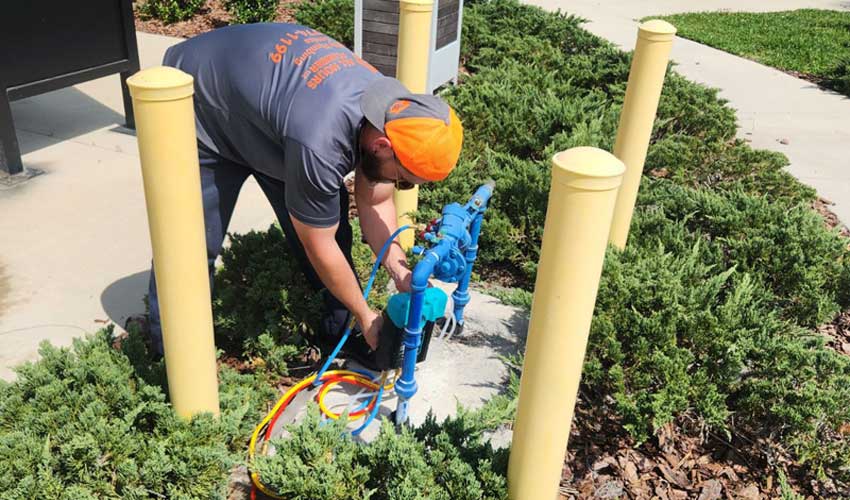
Backflow testing is performed by a Florida State certified backflow assembly tester using specialized pressure testing equipment. The process usually includes:
Visual inspection
The tester checks the assembly for obvious signs of wear, corrosion, leaks, damage, or improper installation.
Pressure testing
The tester uses calibrated gauges and test devices to check whether the backflow preventer is maintaining the correct pressure differentials and preventing reverse flow.
Documentation
After testing, you receive a report showing pass or fail results and any recommended next steps. The reports are also uploaded to the local municipality.
Backflow testing is not a DIY project. The devices are sensitive, the testing procedure matters, and improper handling can damage the assembly or create a false result. If you have a backflow prevention device on your Tampa Bay Area property, All Hours Plumber is ready to help.
How Backflow Repair Works
Backflow repair is completed by a qualified plumbing professional with experience servicing backflow prevention assemblies. The repair process depends on the type of device and what failed during testing, but it often includes:
- Replacing worn seals, springs, or internal components.
- Cleaning and restoring internal check valves.
- Repairing leaks, corrosion issues, or damaged fittings.
- Rebuilding the assembly when appropriate.
- Replacing the device entirely if it is beyond repair or outdated.
After repairs are completed, the assembly should be retested to confirm it passes. This ensures the system is functioning properly and helps meet compliance expectations in areas that require documentation.
When Should You Have Backflow Testing Done?
Testing frequency depends on local requirements and the type of property. Some areas require annual testing, while others may require different intervals based on risk category. The safest approach is to confirm requirements with the local water authority and maintain a consistent schedule.
You should also consider testing or inspection if you notice:
- A change in water pressure.
- A noticeable drop in water pressure.
- Damage to the device or nearby plumbing.
- A broken pipe or recent plumbing work near the assembly.
- Changes to your property, such as adding irrigation, a pool, or equipment that connects to water lines.
If you are not sure what applies to your property in Tampa Bay, All Hours Plumber can help you understand the situation and recommend the next best step. You can also find more information on the City of Tampa Backflow Prevention webpage.
Why Tampa Bay Property Owners Choose All Hours Plumber
When you need backflow related plumbing service, you want a team that is responsive, professional, and easy to work with. All Hours Plumber supports homeowners and businesses across Tampa Bay with:
- Fast scheduling and clear communication.
- Experienced plumbers who understand residential and commercial backflow requirements.
- Honest, upfront pricing before work begins.
- Professional repairs with a solid warranty.
- Service across Tampa, St. Petersburg, Clearwater, and surrounding communities.
Frequently Asked Questions About Backflow Testing and Repair
1. What is the purpose of a backflow prevention assembly?
A backflow prevention assembly helps stop contaminated water from flowing backward into the clean public water supply.
2. Do I need backflow testing if my property is residential?
Many residential properties need testing if they have irrigation systems, pools, or other risk factors. Requirements vary by area, so it is best to confirm local requirements and keep the device maintained.
3. What happens if my backflow device fails a test?
If the device fails, it typically needs repair or replacement, followed by a retest to confirm it is functioning properly.
4. Can I test my own backflow preventer?
No. Backflow testing must be completed by a certified backflow specialist, using specialized calibrated equipment.
5. How do I know if my backflow preventer needs repair?
Signs can include leaks, corrosion, visible damage, pressure issues, or a failed test result.
6. Does All Hours Plumber provide backflow repair services in Tampa Bay?
Yes. All Hours Plumber provides professional backflow testing and repair for homeowners and businesses throughout Tampa, St. Petersburg, Clearwater, and nearby communities.
Schedule Backflow Service With All Hours Plumber Today
Backflow issues are not something to ignore. If you need help with backflow testing, backflow repair, or replacing a failing backflow prevention assembly in Tampa Bay, call the team that homeowners and businesses trust.
Call All Hours Plumber at (813) 774-1199 or submit a service request on our website to schedule service in Tampa, St. Petersburg, Clearwater, and the surrounding Tampa Bay communities.